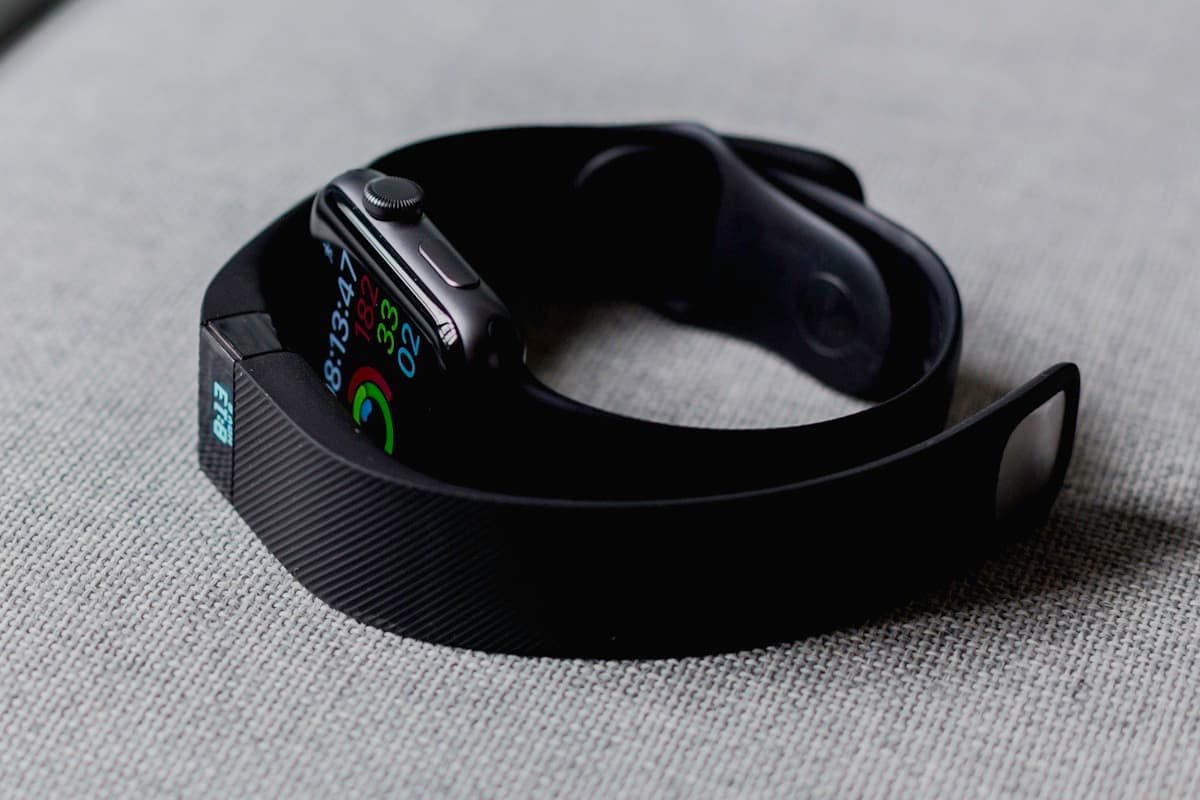

Why your Whoop isn't changing your life.
I have a client who bought a Whoop two years ago. Before the Whoop, he had an Oura ring. Before the Oura, a Garmin. In total, he's spent probably $1,500 on wearables. His sleep is still short, his HRV is still low, and he's still tired at 3pm every afternoon.
He's not alone. I've now coached dozens of people with the same pattern. They own the device. They check the dashboard. And nothing has changed.
It's not because the device is bad. I love wearables. I wear one every day. It's because the device was never going to be the intervention.
What wearables do brilliantly
Let me be clear about what I'm not arguing. Wearables are extraordinary measurement tools. Your Whoop is more accurate on sleep duration than any self-report you'll ever give. Your Oura catches your HRV trend before you feel it. Your Apple Watch flags atrial fibrillation and has almost certainly saved lives already.
Measurement has value. I ask every client I coach to use a wearable if they can. The data they give me changes how I work with that client.
> The wearable gives you the number. Someone or something has to give you what to do with it.
What wearables don't do
Five things I've never seen a wearable actually do for a client, regardless of brand or price:
1. Decide what to change next. A Whoop knows your sleep is short. It doesn't know whether the answer is an earlier bedtime, a darker room, less caffeine after 2pm, or a conversation with your spouse about who gets up with the kids. Those are judgment calls about your specific life.
2. Notice a trend before it compounds. Your wearable can show you the trend. It can't make you pay attention to the trend while the trend is still easy to reverse.
3. Adjust the plan when your life gets in the way. A coach can say "you're travelling next week, let's change the protein target and skip the strength block." A wearable can't.
4. Hold you accountable for the next day. The device doesn't care if you ignore it. It just keeps measuring.
5. Integrate the data with the rest of your life. Your wearable knows your sleep. It doesn't know your boss just cut your team, your kid is sick, and you haven't had a day off in two weeks. Those things matter as much as the numbers.
Those five gaps are coaching jobs. Measurement is a tool. Coaching is the application of that tool to a specific human life.
A real example
A client of mine, a 40-something executive, was losing sleep for a stretch of three weeks. His Whoop caught it. The recovery score went red, then stayed red. He saw it. He kept going.
I saw the same data a week later during our check-in and asked one question: "What's changed in your evenings since the last time we talked?" He told me his company had entered due diligence for a deal and he'd been working until 11pm every night.
The fix wasn't sleep hygiene. The fix was that he needed to call a colleague, delegate two work streams, and push a calendar block earlier in the day for his own recovery. That conversation took 20 minutes. His recovery score was green again in five days.
None of that happens without the wearable. And none of it happens with the wearable alone. They both had to be in the loop.
Data without an accountability layer is decoration
The problem isn't the wearable. The problem is using the wearable as a substitute for the thing that actually moves behaviour. A dashboard in a car shows you how fast you're going. It doesn't steer the car. If you confuse the dashboard for the steering wheel, you get lost even with perfect information.
Most of the clients I've worked with who own expensive wearables and haven't changed their lives don't need a better wearable. They need someone or something paying attention to the data the wearable is already giving them, and acting on it.
What I'd do if I were you
If you already own a wearable and you're frustrated that nothing is changing:
1. Stop blaming the device. It's doing its job. You need to add a job on top of its job.
2. Pick one metric to act on. Not all of them. Just one. Sleep consistency is almost always the right one. If your bedtime variance is greater than 60 minutes over a week, tighten that first.
3. Get an accountability layer. A coach, a group, an AI that knows your patterns. Something that notices the trend before you do and asks a useful question instead of sending a generic notification.
4. Don't buy another wearable. You already have the data. You have an action problem, not a measurement problem.
The wearable on its own was never going to change your life. That was never its job. Your job, or your coach's job, was always the rest.
Sources
- Research on wearable adherence and behaviour change, Journal of Medical Internet Research, 2023, found that wearable use correlates with short-term behaviour change but not with long-term outcomes without an accountability layer.
- PriorityMe Research & Evidence Bank, Psychology of Accountability in Coaching, April 2026.
Stop reading. Start doing.
Find your starting point in 5 minutes.
Take the free Movement Audit and see exactly what to work on first.
Take the Movement Audit