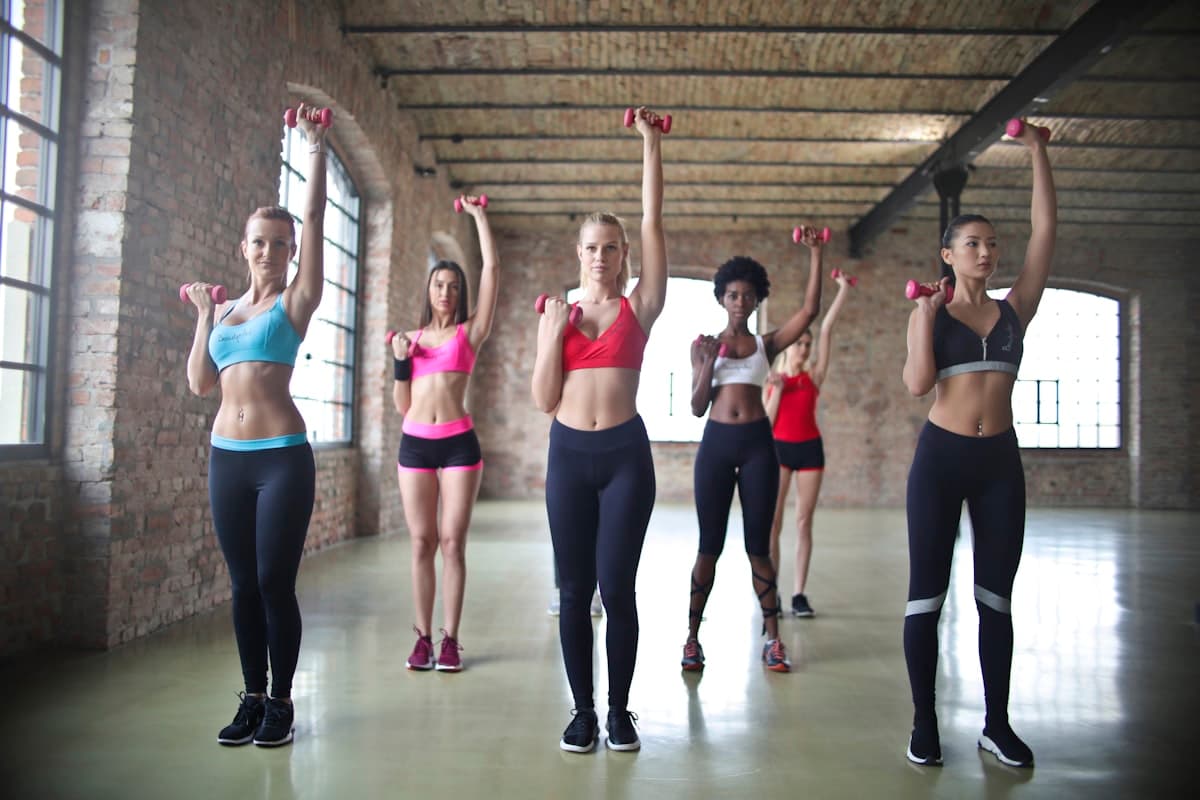

The 5 fundamental movement patterns you probably skip at home.
Most home workouts I see are a random collection of exercises someone screenshot from Instagram. They'll feel hard. You'll sweat. You might even see some results in the first few weeks. But they'll miss the five or six movement patterns the human body was actually built to train, and over time you'll plateau or pick up a nagging injury that doesn't make sense.
I coach a lot of busy professionals through home training. They don't have two hours a day. They don't want to book a gym session they'll skip. They need a short list of movement patterns to cover every week, and the right minimum weight to make each one count.
This is that list.
The rule behind the list
Human bodies move through a small number of basic shapes. Squat, hinge, push, pull, carry, and rotate. Every sport, every daily task, every weird thing you'll ever have to do with your body is a variation on those six patterns. Train each of them, and you're training everything.
There's no right or wrong movement. There's moving safely, meeting yourself where you are, and respecting the pattern.
Before any of them, the cue that matters most: find your neutral spine and keep it there. Neutral is the natural curve your spine has when you stand tall with your ribs stacked over your pelvis. Not arched, not tucked. Every exercise below assumes you're starting from that position and returning to it at the end of each rep.
1. Squat
The hip, knee, and ankle working together to lower and stand. You use this pattern every time you sit down, stand up, or pick up a kid off the floor.
Home version: Goblet squat. Hold a dumbbell or kettlebell at chest height. Feet hip-width to shoulder-width, toes slightly out. Sit back and down. Drive through your whole foot to stand.
Weight starting point: 15-25 lbs for most women, 25-35 lbs for most men. This is a floor, not a target. If you can do 12 reps easily, go heavier.
Reps: 3 sets of 8-12.
2. Hinge
The hip fold. Everything happens at the hips while the lower back stays neutral. If you don't train this pattern, your lower back compensates every time you pick something up, and eventually you throw it out moving furniture.
Home version: Romanian deadlift. Hold a weight in front of your thighs. Slight bend in the knees. Push your hips back like you're closing a car door with them. Lower until you feel a stretch in your hamstrings, then drive back up.
Weight starting point: 20-35 lbs for most women, 35-50 lbs for most men. The hinge tolerates more weight than the squat because the posterior chain is strong.
Reps: 3 sets of 10.
3. Push
Pressing something away from your body. Horizontal (push-up, bench press) or vertical (overhead press).
Home version: Push-up. On toes or knees depending on your strength. Chest to the floor, body in a straight line from head to heels. Keep your elbows at about a 45-degree angle to your torso, not flared wide.
Progression: If you can do more than 15 push-ups with good form, elevate your feet. If you can do 5 of those, add a backpack with weight in it. Push-ups scale with you for years.
Reps: 3 sets to 2 reps short of failure.
4. Pull
The most neglected pattern in home workouts because it's the hardest to do without equipment, and the most important for counteracting all the hours you spend hunched over a laptop.
Home version: Bent-over row with dumbbells or a band row. Hinge forward (using the hinge pattern above). Pull the weights to your lower ribs, squeeze your shoulder blades, lower under control.
Weight starting point: 15-25 lbs per hand for dumbbell rows as a starting range. For bands, pick a tension where 10 reps feels hard but doable.
If you own nothing else, buy a heavy resistance band. A single $20 band anchored to a doorframe solves the pull pattern forever. I recommend it to every client who trains at home.
Reps: 3 sets of 10-12.
5. Carry
Picking up heavy things and walking with them. This is the most functional pattern on the list and the one almost nobody trains.
Home version: Farmer's carry. Hold a heavy dumbbell, kettlebell, or weight plate in each hand. Stand tall, neutral spine, braced core. Walk at a normal pace.
Weight matters here more than most people realize. A farmer carry is only training grip, core, and gait stability if the weight is actually heavy. "Heavy" in this context means at least 25-30% of your bodyweight *per hand* for women, 35-40% per hand for men. A 150-lb woman should be carrying 35-40 lbs per hand minimum. A 180-lb man, 60+ lbs per hand.
If the heaviest thing you own is a 15-lb dumbbell, that's a warm-up carry, not a training carry. Save up for a pair of heavier dumbbells or a trap bar, or wait until the gym. This is the one pattern I'd rather you skip at home than do light.
Distance: 3 rounds of 30-40 steps.
6. Rotate (and anti-rotate)
Controlled rotation through the core. Most of real life happens in rotation (turning to grab something, swinging a golf club, throwing a bag into a car). An untrained rotational core is why people throw their back out doing simple things.
Home version: Pallof press. Loop a resistance band around a sturdy post or door anchor at chest height. Stand sideways to the anchor. Hold the band with both hands at your chest. Press straight out in front of you and resist the band trying to rotate you back toward the post. Hold for 2 seconds. Bring back in.
Reps: 3 sets of 10 per side.
Putting it together
A reasonable week:
- Day A: Squat, Push, Carry
- Day B: Hinge, Pull, Rotate
Two sessions a week hits every pattern. Three is better. More than four is usually unnecessary for someone who isn't training for a specific sport.
The fancy variations you see online are not more effective than these basics. They're just more interesting to post. Cover the six patterns, respect the loading, keep your spine neutral, and show up twice a week. That's training.
Sources
- Gray Cook and Brett Jones, *Movement: Functional Movement Systems*, on fundamental movement patterns and the FMS framework.
- Renaissance Periodization minimum effective volume research on strength training frequency.
- PriorityMe coaching archive on home training for busy professionals.
Stop reading. Start doing.
Find your starting point in 5 minutes.
Take the free Movement Audit and see exactly what to work on first.
Take the Movement Audit